
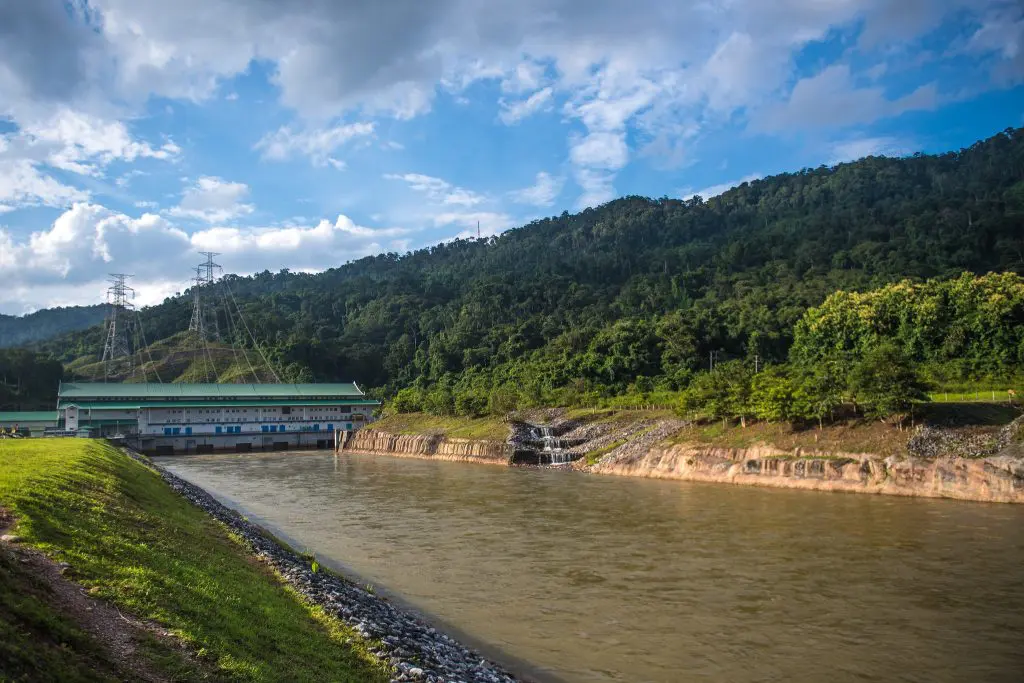
The Nam Theun 2 hydropower project in Laos. Southeast Asia's reliance on hydro leaves its energy supply exposed to drought and El Niño-related fluctuations in water availability.
Key points:
-
A record El Niño threatens Southeast Asia’s clean energy transition by slashing hydropower output and driving reliance on coal and gas.
-
Without rapid diversification into solar, wind and storage, temporary drought shortfalls risk triggering long-term investments in new fossil fuel infrastructure.
-
The acute impact will hit in early 2027, as depleted reservoirs coincide with soaring cooling demand during the dry season.
-
Regional thinktanks urge Asean to move beyond grid interconnections by integrating climate resilience, modular renewables, and demand-side management.
A supercharged El Niño could threaten Southeast Asia’s reliance on hydropower, with hotter, drier conditions threatening the region’s renewables transition.
This year’s El Niño phenomenon, which is on course to be the strongest on record, is already intensifying Indonesia’s annual wildfire season, raising risks of transboundary haze, agricultural disruption and inflationary pressures.
As Southeast Asia accelerates its shift away from imported fossil fuels, reduced rainfall and severe droughts resulting from a “supersized” El Niño are expected to slash hydropower generation, which dropped by 21 terawatt hours in 2023 compared to 2022, despite 500MW of new capacity being added.
Hydropower currently contributes to roughly one-sixth of Southeast Asia’s electricity output, with Cambodia, Laos, Myanmar and Vietnam having the most hydropower-reliant power systems.
Hydropower is often regarded as one of the most flexible low-carbon sources of power generation. Compared to solar and wind, it can respond quickly to changes in demand and output fluctuations, helping maintain grid stability during periods of high demand.
However, with unfavourably warm conditions likely to persist until early 2027, analysts forecast that a possible hydropower shortfall could raise the region’s reliance on coal and LNG, especially in light of rising electricity needs for cooling.
Despite Vietnam leading the region in new solar and wind buildout, for instance, the country’s most recent decline in hydropower generation in June was still largely offset by coal-powered generation.
Similarly, between 2019 and 2020, drought-driven shortages in Cambodia disrupted 41% of the country’s power generation, pushing the country to adopt coal as a stopgap measure.

Laos – often regarded as the “battery of Southeast Asia” – was also forced to reduce its electricity exports to Thailand by 30% during the dry season, disrupting regional energy supply chains.
“The key issue is therefore not only how countries manage an El Niño-related shortfall, but how they plan for a future where hydropower output may become more variable,” said Flavia Frederick, a research associate at the Asean Centre for Energy, an intergovernmental thinktank advising the regional bloc’s 11 member states.
“Planning should account not only for normal seasonal changes, but also for more challenging conditions where multiple parts of the system are under stress at the same time.”
Failing to realistically plan for a decline in hydropower output during periods of drought risks creating a fossil fuel lock-in, as the energy vacuum could get filled through new coal and gas infrastructure, rather than more renewable diversification and storage.
Plans would also need to acknowledge the limits of regional interconnections as a strategy for bolstering resilience, since the benefits of closer grid integration in Asean “may be limited if several countries face the same drought at the same time,” she added.
Greatest stress test to come in early 2027
“The most acute effects [of El Niño] will be measurable in the first six months of 2027 when hydropower will be the power generation of choice,” said Brian Eyler, senior fellow and director of the Southeast Asia and Energy, Water & Sustainability Programmes at the Stimson Centre.
Hydropower typically sees the highest demand during the drier months of December through May, he told Green Central Banking.
“Dams fill their reservoirs during the previous wet season and then utilise that reserve of water to produce electricity during the dry season,” Eyler explained. But weak rainfall could leave less water available for hydropower generation in the 2027 dry season, he added.
Frederick cautioned that Asean is “entering a limited preparation window”, given that the greatest pressure on hydropower could come several months after the El Niño peak between November and January.
“From a power-system perspective, there is also no comparable Asean-wide mechanism specifically designed to manage widespread climate-related power-system stress,” she said.
“Asean therefore needs a wider mix of resources to support the power system when hydropower is less available,” Frederick said, citing batteries, pumped storage, geothermal and floating solar and demand response.
Solar and wind with storage “would be the fastest solutions”, though geothermal could potentially play a role as a baseload energy source”, said Dinita Setyawati, senior energy analyst for Asia at thinktank Ember. Solar and wind are also more modular, making them easier to deploy and quicker to restore following disruptions, she said.

The Mekong River Commission (MRC), an intergovernmental body that facilitates cooperation in the Lower Mekong Basin, struck a more sanguine tone, telling Green Central Banking that while the extreme weather event is expected to bring uncertainty, it is “not a guaranteed drought outcome.” It is also studying the potential of pumped storage hydropower as renewable backup and has identified over 18,000 potential sites in the basin.
Among its four member countries, only Laos remains reliant on hydropower for the majority of its generation mix.
“Thailand and Vietnam have far more diversified generation portfolios,” said a spokesperson, while “Cambodia has moved substantially towards imports and solar in recent years.”
But Laos remains particularly exposed; during the 2023 El Niño, it spent US$240m on energy imports from Thailand.
“A super El Ninõ event could exacerbate this cost and inequity to Laos… especially if their hydropower exports drop and electricity imports rise,” said Yong Ming Li, an adjunct fellow at the East-West Centre and lecturer at the Singapore University of Social Sciences.
Demand response remains overlooked
Beyond building new renewables capacity, demand-side measures could potentially be deployed quickly while reducing long-term pressure on the region’s power system, argued Frederick.
Energy efficiency, appliance standards, labelling and demand management should be treated as part of power system planning, not only as market responses during periods of scarcity, she suggested.
Power systems need to consider demand as a planning variable, including how electricity use can be managed and prioritised during periods of stress, said Frederick.
For instance, policymakers should consider which electricity needs are most critical to protect in the face of supply constraints, such as hospitals and essential services, rather than treating all demand equally
“This is perhaps the fastest and cheapest form of flexibility. Rather than building generation, consumers can shift or reduce electricity use during periods of system stress. This is still relatively underdeveloped across Asean compared with generation and storage.”
To ensure that El Niño-linked shocks speed up – rather than derail – the region’s renewables push, Asean also needs a “common understanding of energy resilience”, said Ember’s Setyawati.
Importantly, “resilience needs to be considered as a design criterion from the beginning,” said Frederick.
“Many distributed energy projects are … not always tested against climate-related stresses such as prolonged droughts, extreme heat or wider system disruptions.”
This page was last updated September 8, 2026
Written by

Gabrielle See is an award-winning journalist based in Singapore who has written for Green Central Banking since 2025. She has covered the intersections of finance, geopolitics and energy transition in Asia over the past five years for regional and international publications, including CNBC, Eco-Business, Southeast Asia Globe and the Business Times.


