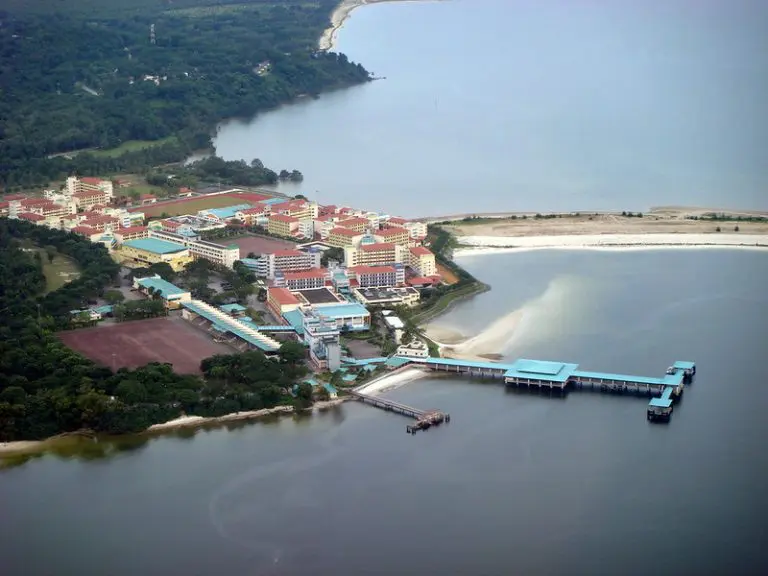
Harrismith Beach in Barbados. Despite it's photogenic location, it is exposed to strong Atlantic swells, and is vulnerable to coastal erosion, storm surges and hurricanes. Photo by Johnmartindavies / Wikimedia Commons.
Key points:
-
The IMF and World Bank are revising low-income debt assessments to account for the long-term economic gains of climate adaptation.
-
The updated framework balances upfront resilience costs against the steep future fiscal damage of unmitigated disasters.
-
Vulnerable nations require enhanced modelling capacity and climate data before the module becomes operational in 2027.
-
Debt assessment reforms should be extended to climate-vulnerable middle-income economies that lack access to concessional finance.
The International Monetary Fund (IMF) and World Bank are reforming their debt sustainability framework for low-income countries (LIC-DSF), used to determine whether a country can meet its debt repayments without debt relief or unrealistic cuts to public spending.
Announced in September, the reforms introduce a new long-term module that allows the IMF, World Bank and country authorities to examine how investments, including in climate adaptation, affect long-term debt sustainability. We welcome these adjustments to an instrument that is critical to influencing how governments allocate limited resources.
But as Nepal’s devastating and costly floods have shown, countries impacted by climate change must make choices about finance protection against future shocks. This brings into focus a key question behind the LIC-DSF reforms: when countries invest to reduce future risks – for instance flood defences or slope stabilisation – are we adequately capturing the benefits of greater resilience, or are we still far better at counting the debt than the losses that debt helps avoid?
The returns on resilience
The Caribbean’s experience with Hurricane Beryl in 2024 shows why that distinction matters. In Grenada, damage was estimated at 16.5% of GDP. 15 days after the storm, the government received US$44m from the Caribbean Catastrophe Risk Insurance Facility, helping repair infrastructure and support affected communities. Insurance provided money that would otherwise have had to come from existing budgets, borrowing or external assistance.
In Jamaica, a $12m programme had strengthened 12 health facilities before Beryl. Two upgraded centres, Mandeville and Santa Cruz, suffered minimal damage; Mandeville’s solar panels supported clinical services during power outages.
These are different forms of protection, but both show why the cost of planning for a disaster must be weighed against the consequences of facing it unprepared. Damaged crops, homes and infrastructure translate into lost output, lower tax revenues and higher demands for public spending. For a government already carrying substantial debt, the additional borrowing that comes after a natural disaster can leave its finances weaker long after the immediate emergency has passed.
The adjustments to the LIC-DSF offer a chance to bring the benefits of investing in resilience more consistently into financial decisions. In practice, resilience investments are often built into projects aimed at enhancing social protection or economic growth. A port upgraded to withstand storm surge is still a port, while a flood-resistant road still connects people to workplaces and companies to markets. The difference is that when enhanced with resilience in mind, these investments can continue functioning through a shock, helping goods move, businesses operate and revenues hold up. While the additional construction cost is visible in the budget, the losses avoided over the investment’s lifetime are harder to measure and too often receive less attention.
Understanding future savings cost
Debt sustainability analyses influence decisions at many levels. Finance ministries use them when setting budgets and managing debt; it informs IMF and World Bank advice and lending; and creditors consult such analysis when deciding whether to lend and at what cost. An incomplete assessment can affect both a country’s investment choices and the finance available to pursue them. What the analysis sees and communicates therefore matters greatly.
That is what makes the IMF and World Bank’s LIC-DSF reforms significant.
The challenge now is to put them to work: countries need the information and capabilities to understand both what resilience costs today and what it could save them tomorrow. Uganda has begun testing these questions. Its Ministry of Finance, Planning and Economic Development is modelling how increased spending on irrigation, sustainable land management and agroforestry could affect the economy and public finances during a severe drought. It asks whether stronger yields, exports and tax revenues, together with lower borrowing needs after the shock, could justify the upfront cost.
Once finished, the findings will help inform how those investments are financed. Some may be affordable through ordinary lending. Others may require guarantees, longer repayment periods, concessional finance or grants. Showing that an investment reduces future losses helps make that judgement; it does not remove the need to make it.
How these reforms could go even further
The IMF and World Bank reforms aren’t the end. Building on the positive momentum of the revised LIC- DSF signals, we see three priorities going forward.
First, countries need the tools and capabilities to use the new framework. The analysis is demanding, particularly for debt management offices and finance ministries already operating with limited modelling capacity and incomplete climate data. The IMF and World Bank plan to publish new guidance and train both country authorities and their own teams before the revised framework becomes operational in 2027. That training must make the long-term module accessible, widely understood and routinely used where
climate risks are material. Uganda’s experience, and other country applications, should help shape the training. Governments that bring their own rigorous analysis will also be better placed to discuss assumptions and investment priorities with the IMF.
Second, creditors, investors and development partners need to act on credible findings. Countries have little incentive to put effort into better analysis if the results make no difference to lending decisions. Better evidence of resilience returns must translate into better financing terms.
Finally, around three quarters of climate-vulnerable countries are middle-income and are assessed under the IMF’s debt sustainability analysis framework for market-access economies – the MAC-SRDSF. For example, Barbados’s investment plan for prosperity and resilience identifies $11.6bn of investment through 2035, with close to 45% in adaptation, including energy and water security, upgraded healthcare facilities, schools that serve as hurricane shelters, robust low-income housing and coastal protection and rehabilitation. These investments may offer strong economic and fiscal returns while still costing more upfront than the country can sustainably finance on ordinary terms.
The IMF should explain how the changes for low-income countries will inform its approach to climate-vulnerable middle-income economies. Where access to concessional finance depends primarily on income levels, countries with substantial climate risks can still struggle to obtain the terms they need to make the necessary investments in resilience. Better analysis must be matched by financing terms that reflect risks and commitment to doing what is needed to enhance resilience to them.
With the UK’s upcoming G20 presidency in 2027, it provides a natural moment to ensure that institutional reforms lead somewhere: stronger country capabilities, a growing body of evidence on the macro-fiscal returns to resilience, and financing that responds to those returns. Reforming the analysis matters only if it changes investment decisions.
We have spent years asking vulnerable countries how much resilience will cost. We now need to become equally rigorous about the other side of the ledger. What will it cost if they do not invest?
This page was last updated November 2, 2026
Written by

Dr. Pepukaye Bardouille, director of the Bridgetown Initiative and special advisor in the Prime Minister's Office of Barbados.

Dr. Sam Mugume, assistant commissioner in the macroeconomic policy department at Uganda's Ministry of Finance and special representative of the minister to the Coalition of Finance Ministers for Climate Action.